Floral Element Hand Drawn Set Bundle
A Designer’s First Look: Soft, Sketchy, and Surprisingly Versatile
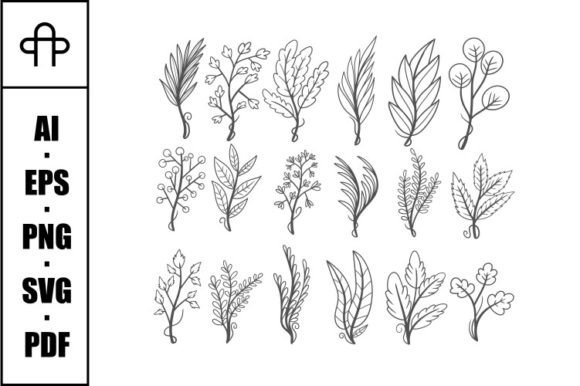
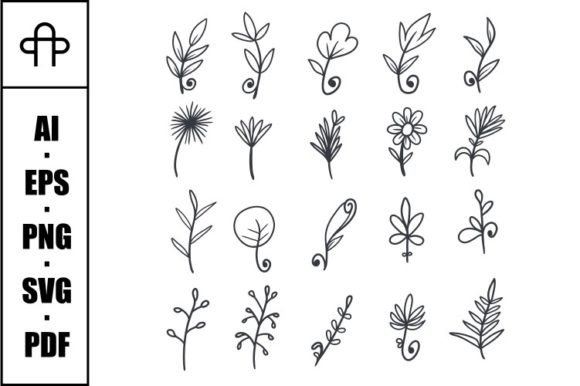
Unzipping the Floral Element Hand Drawn Set Bundle, I immediately felt that quiet spark—the kind you get when a design feels like it was drawn with intention, not generated. These aren’t stiff clipart florals or over-rendered vector bouquets. They’re loose, organic, slightly imperfect—think ink sketches scanned with gentle grain, then cleaned just enough to hold shape without losing soul. There’s a lightness here: delicate stems, asymmetrical petals, subtle tapering lines that suggest movement rather than rigidity. It’s the kind of collection that whispers “handmade” before a single stitch is laid down.
What This Bundle Actually Wants to Be in Real Life
Last week, I used three elements from the Floral Element Hand Drawn Set Bundle on a custom embroidered linen tote for a local herbalist’s shop. One small sprig near the strap seam, another tucked into the bottom corner, and a third scaled up as a focal motif centered on the front panel. The result? A product that looked thoughtfully curated—not mass-produced. Customers paused at the booth, ran fingers over the satin-stitched stems, and asked, “Did you draw these yourself?” That’s the power of this set: it reads as personal, even when stitched by machine. It fits naturally on baby onesies (soft petals, no sharp angles), kitchen towels (light fill stitch density means breathability), aprons (the sketchy flow complements hand-stitched hems), and even minimalist sweatshirt cuffs—where one trailing vine adds quiet elegance without overwhelming.
Where It Shines—and Where You’ll Want to Pause
The Floral Element Hand Drawn Set Bundle excels in context where authenticity matters: Etsy listings for personalized gifts, boutique merchandise, nursery decor, wedding favor tags, and handmade holiday embroidery. Its line-weight variation translates beautifully into running stitch outlines and delicate satin-stitched centers—ideal for patches, pillow covers, and tea towel monograms. On textured fabrics like terry cloth or slub linen, the hand-drawn quality actually enhances legibility; the slight irregularity camouflages minor stitch distortion.
But be mindful: tiny buds or fine connecting lines may vanish on dense, dark fabric unless paired with high-contrast thread colors. On stretchy knits (like lightweight sweatshirts), those slender stems need proper cutaway stabilizer—no skipping that step. And while the set includes clean SVG and EPS files ideal for digitizing, don’t assume every element is optimized out-of-the-box for 3-inch hoops. That dainty forget-me-not cluster? Lovely on a mockup—but test it first on scrap jersey before committing to a cap side panel. Curved surfaces demand simplified versions, and tightly layered garments (like reversible zip-ups) benefit from lower stitch density to avoid bulk.
How It Shapes Perception—Before and After Stitching
This isn’t just about prettiness. The Floral Element Hand Drawn Set Bundle subtly elevates perceived value. When customers see hand-drawn-style embroidery on a finished product, they associate it with care, time, and individuality—even if it’s produced commercially. That impression builds trust: a handmade product feels more intentional, a personalized gift more meaningful, a small shop product more distinctive. For Etsy sellers, it strengthens brand consistency across listings—imagine using the same stem motif on packaging stickers, digital mockups, and actual embroidered patches. It also boosts buyer engagement: shoppers linger longer on listings featuring naturalistic, non-generic graphics. And yes—it makes holiday embroidery feel warmer, baby embroidery gentler, and wedding gifts more quietly sentimental.
Practical Notes Every Embroidery Designer Should Keep Handy
- Always test on scrap fabric first—especially with thin cottons or textured weaves. See how fine lines hold up and whether fill areas breathe or puddle.
- Check thread color contrast early. These designs rely on line clarity and subtle layering—low-contrast combos (e.g., light grey on oatmeal linen) can mute their charm.
- Review stitch density manually. Some hand-drawn elements digitize with tighter fills than needed. Loosen density for breathable items like tea towels or baby caps.
- Confirm hoop size compatibility before digitizing for curved surfaces. That elegant climbing vine may need trimming or repositioning for a cap front.
- Inspect small details at actual stitch scale. Zoom in on your embroidery software—do petal tips disappear? Are connecting lines too narrow for reliable satin stitch?
- Test black-and-white mockups to assess silhouette strength. If it reads well in grayscale, it’ll translate cleanly across fabric tones.
- Compare light and dark backgrounds. What sings on ivory linen might recede on navy denim—adjust thread weight or add underlay accordingly.
- Use appropriate stabilizer—no exceptions. Even light cutaway helps preserve the integrity of delicate stems on knits or loosely woven fabrics.
- Verify licensing terms before selling finished items or digital products. Since this is a Graphics bundle marketed for company or brand use, confirm commercial rights cover both physical embroidery and digital resale (e.g., as part of a craft bundle).
Final Thought: Not Just Decoration—A Design Language
The Floral Element Hand Drawn Set Bundle doesn’t shout. It invites. It’s the difference between “embroidered” and “thoughtfully embroidered.” As a designer who’s digitized hundreds of motifs—and rejected just as many—I keep coming back to sets like this because they respect the craft: they leave room for interpretation, respond gracefully to fabric behavior, and support storytelling instead of competing with it. Whether you’re stitching a single custom patch for a friend or building a cohesive line of small shop products, this bundle gives you vocabulary—not just visuals. Use it with attention, test with honesty, and let the hand-drawn honesty do the rest.