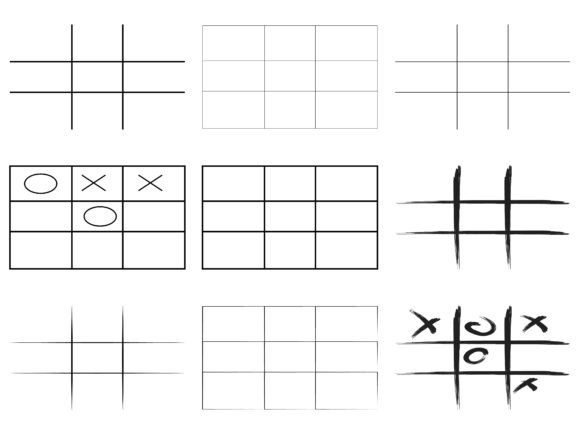
Tic Tac Toe Grid Collection
First Impression: Playful, Clean, and Surprisingly Versatile
When I opened the Tic Tac Toe Grid Collection, I wasn’t expecting much beyond a novelty graphic—but what landed in my inbox felt intentional. Nine PNGs at 300dpi and nine SVGs (both vertical and horizontal orientations) gave me immediate flexibility—not just for digital mockups, but for thoughtful embroidery planning. The grids aren’t fussy or overly decorative; they’re balanced, evenly spaced, and built with quiet confidence. There’s no forced whimsy, no cluttered corners—just clean geometry that breathes. That matters. In embroidery, especially on small items like baby onesies or cap fronts, breathing room equals stitch clarity. This set feels like it was designed *with thread in mind*, not just pixels.
A Real Project Test: Embroidering a Linen Kitchen Towel
Last week, I used one of the horizontal grid layouts as the centerpiece for a custom linen tea towel—meant for a local café’s opening gift. I chose a medium-weight cotton-linen blend, medium-cut stabilizer, and matte cotton thread in soft charcoal and cream. The result? Crisp, readable lines. No skipped stitches. No distortion in the corner squares—even at 3.8" wide. What stood out most was how naturally the design anchored the towel without shouting. It didn’t compete with hand-stitched hems or fabric texture; it complemented them. Customers noticed it immediately—not as “a tic tac toe board,” but as “that clever, calm little detail.” That’s the difference between decoration and design.
Where It Shines—and Where to Pause
The Tic Tac Toe Grid Collection works beautifully across several real-world embroidery contexts:
- Custom apparel: On midweight sweatshirts and structured tote bags, the grid holds shape and reads clearly even at modest sizes (3–4").
- Baby embroidery: Its gentle rhythm reads as soothing—not busy—on onesies and burp cloths, especially when stitched in tonal thread.
- Embroidered patch: The SVG files scaled cleanly into a 2.5" circular patch layout. Minimal fill stitch, mostly satin and running stitch outlines—low stitch density, high legibility.
- Holiday embroidery & personalized gifts: Paired with simple monograms or seasonal motifs (a tiny sprig, a single star), it adds interactive charm to ornaments, pillow covers, or nursery wall hangings.
- Craft business & Etsy seller use: As a recurring visual motif across product listings—think matching tea towels, aprons, and oven mitts—it builds subtle brand consistency without needing logos or slogans.
But let’s be honest: it’s not magic. Use caution on:
- Thin or stretchy fabric (like jersey or lightweight rayon): The grid’s structure relies on stability. Without proper cutaway stabilizer and precise hooping, lines can blur or skew.
- Curved surfaces (caps, curved pockets): The horizontal version adapts better than vertical here—but test first on scrap. Corners may pull slightly if the curve is aggressive.
- Dark fabric with light thread: At smaller sizes (<2.5"), fine interior lines can fade visually. Boost contrast by choosing thread one or two tones deeper than your base fabric.
- Frequent-wash items (baby bibs, kitchen linens): Confirm your thread and stabilizer combo holds up through multiple cycles—especially where intersecting lines create denser stitch clusters.
What It Does for Your Handmade Product—Beyond the Stitch
This isn’t just a machine embroidery design—it’s a quiet value amplifier. When customers see this grid on a handmade tote bag, they don’t just register “game.” They sense intentionality: the balance, the spacing, the restraint. That translates directly to perceived quality and trust. For Etsy sellers, that means fewer questions about “what does this mean?” and more comments like “so clever” or “exactly what I pictured.” For boutique branding, it offers a subtle, ownable visual rhythm—something repeatable across collections without feeling repetitive.
It also plays well with others. Pair it with minimal applique designs for tactile contrast, or layer it beneath a delicate running stitch border for depth. Because the SVG files include both orientations, you can rotate context—not just placement. A vertical grid on an apron pocket feels purposeful; the same grid rotated horizontally across a pillow cover feels grounded and calm.
Practical Notes from the Hoop
Before stitching your first Tic Tac Toe Grid Collection file:
- Test on scrap fabric *with your exact stabilizer and thread*—not just on paper or screen.
- Check small details: Are all nine squares equally defined? Do interior lines stay sharp at your intended size?
- Review stitch density in your embroidery software—especially where lines intersect. Overly dense areas risk puckering on lightweight fabrics.
- Confirm hoop size compatibility. Some versions sit comfortably in a 4x4 hoop; others (especially full-grid layouts) may need 5x7. Don’t assume.
- Run black-and-white mockups. Does the design retain personality in monochrome? (It does—this set passes that test cleanly.)
- Compare light and dark fabric backgrounds. The grid’s strength lies in its neutrality—so verify contrast works for your palette.
- Verify licensing terms before selling finished products or bundling the digital embroidery file with other design assets. The listing says “can be used in business designs”—but always confirm scope before scaling commercially.
Final Thought: Design That Serves the Maker
The Tic Tac Toe Grid Collection doesn’t try to be everything. It’s not ornate. It’s not trendy. It’s not loud. And that’s why it’s useful. In a market saturated with overdesigned graphics, this set gives embroidery designers, craft business owners, and Etsy sellers something rare: a clean, adaptable, stitch-smart foundation. Whether you’re building a cohesive line of nursery decor, designing embroidered patches for a school fundraiser, or adding quiet charm to holiday kitchen textiles—it holds space without demanding attention. That kind of restraint, executed well, is professional-grade design thinking. And it’s exactly what makes a Web Elements collection feel like a Graphics toolkit—not just a download.